Switzerland is a small but demanding Digital Signage market. Demand comes mainly from luxury retail, tourism and transport, and corporate communication, and Swiss buyers expect high quality, architectural integration, multilingual content, and Swiss data hosting. This article reviews the market drivers, the language regions, the key sectors, and the technical requirements.
On this page
Key takeaways
- Grand View Research (June 2026 edition) expects the global Digital Signage market to reach USD 58.4 billion by 2033, a CAGR of 8.2% from 2026 to 2033; in Switzerland, demand is driven mainly by luxury retail and the modernisation of transport infrastructure
- Swiss luxury, including the watch industry, is a primary driver of premium Digital Signage adoption
- Distinctive Swiss requirements: architectural integration, FR/DE/IT multilingual content, and Swiss data hosting
- The main airports serving Switzerland, including Zurich, Geneva, and Basel-Mulhouse, create substantial Digital Signage opportunities
Market drivers shaping Swiss Digital Signage demand
Switzerland’s Digital Signage market is one of the most demanding in Europe. With a relatively small population and one of the world’s highest GDPs per capita, Swiss businesses and consumers maintain exceptionally high standards for technology, design, and service quality. Grand View Research (June 2026 edition) values the global Digital Signage market at USD 31.1 billion in 2025 and expects it to reach USD 58.4 billion by 2033, a compound annual growth rate (CAGR) of 8.2% from 2026 to 2033. In Switzerland, demand is driven by luxury retail innovation, the modernisation of transport infrastructure, and the transformation of corporate communication.
Unlike larger European markets focused on volume deployment, Switzerland’s approach emphasises premium in-store experiences, architectural integration, and content excellence. This quality-over-quantity mindset means that solutions are judged on build quality, integration, and content as much as on screen specifications.
Luxury retail transformation
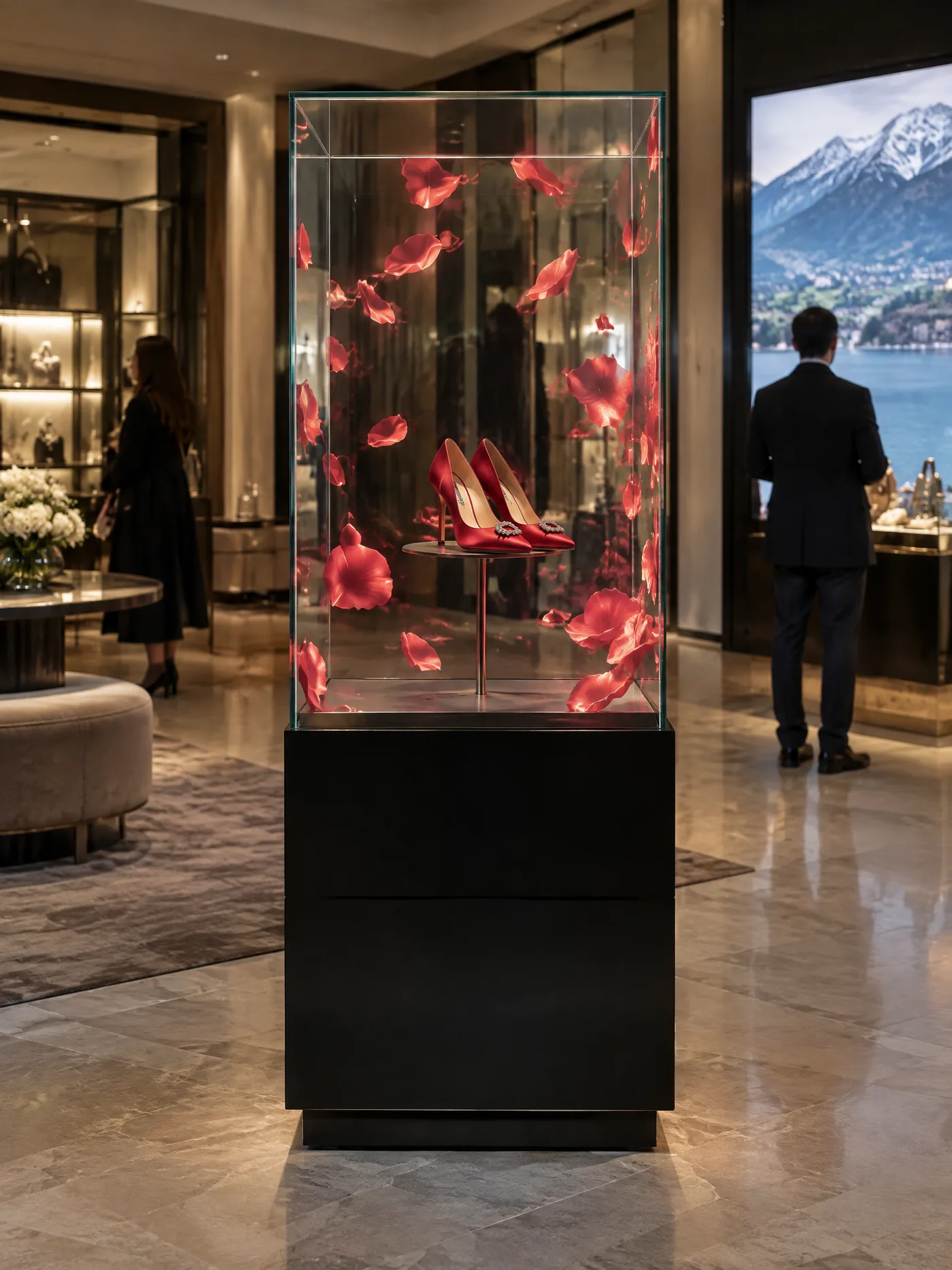
Swiss luxury, including a watch industry that ranks among the country’s leading export industries, is a primary driver of premium Digital Signage adoption. Major retail corridors such as Zurich’s Bahnhofstrasse, Geneva’s Rue du Rhône, and Basel’s Freie Strasse feature flagship stores from the great luxury houses, each seeking distinctive visual communication solutions.
Swiss luxury retailers prioritise Digital Signage that enhances rather than disrupts the premium shopping experience. This means displays must demonstrate exceptional build quality, achieve high colour accuracy for product presentation, and integrate seamlessly with store architecture. Interactive elements focus on personalised consultation support rather than promotional messaging.
Tourism and hospitality
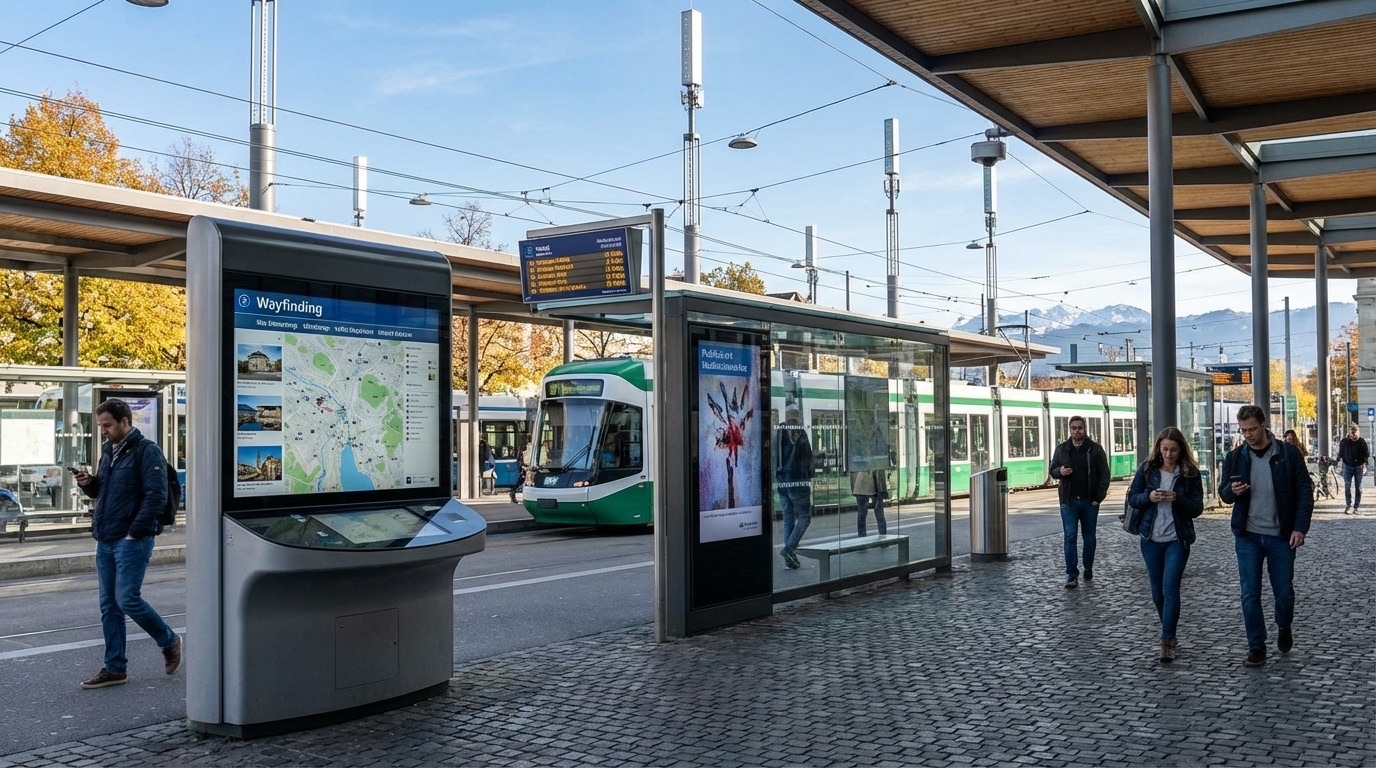
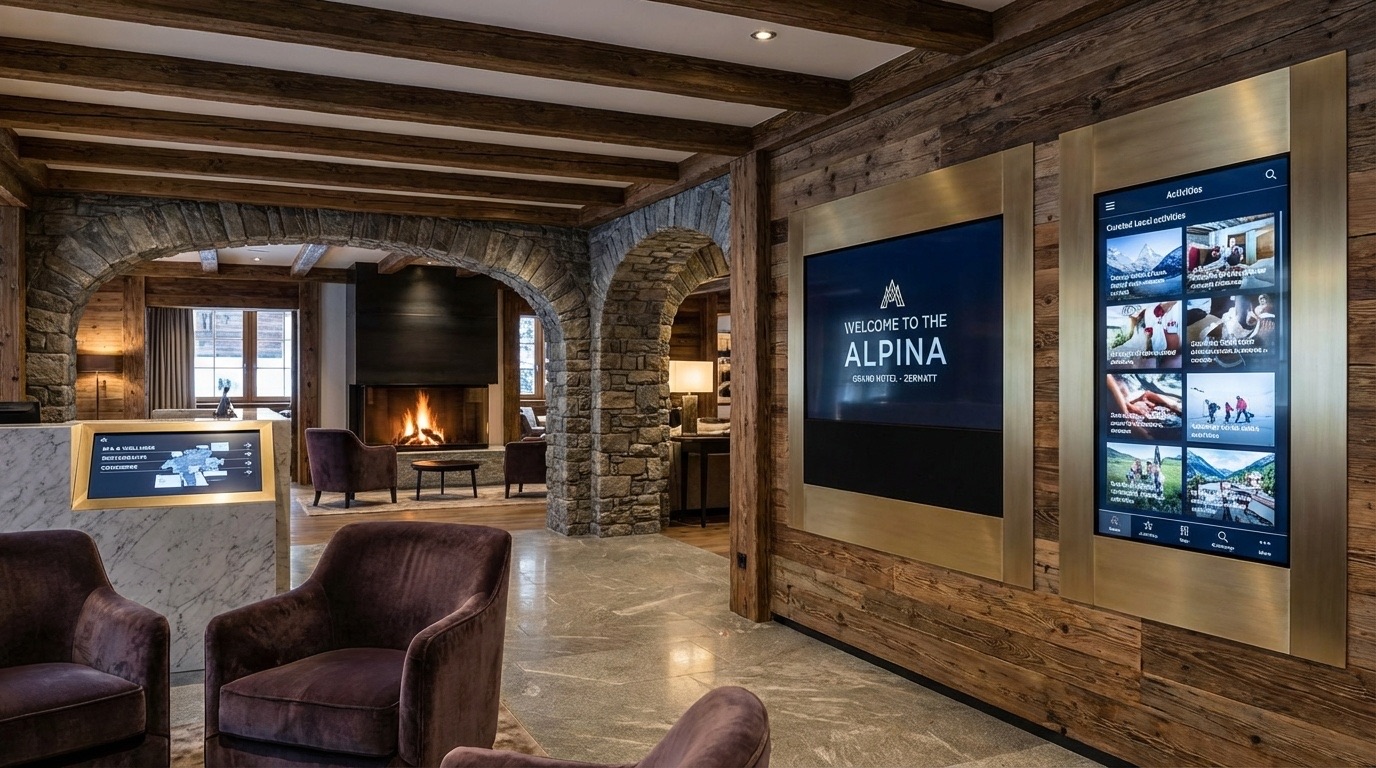
Switzerland’s tourism sector contributes significantly to Digital Signage demand. Busy airports serving the country, including Zurich, Geneva, and Basel-Mulhouse, create opportunities for wayfinding systems, advertising networks, and real-time information displays. The country’s world-renowned hospitality industry, from palace hotels to mountain resorts, increasingly adopts Digital Signage for guest communication, concierge services, and ambient design.
Corporate communication modernisation
As home to numerous multinational headquarters and financial institutions, Switzerland presents substantial corporate Digital Signage opportunities. Companies are transforming reception areas, meeting spaces, and employee communication systems with integrated display networks. The emphasis on data security and Swiss hosting creates demand for content management solutions hosted on-premises or in a Swiss cloud. CMS platforms hosted in Switzerland, such as DATAVSN, the Digital Signage software developed by HYPERVISUAL, meet this requirement.
Regional market characteristics
German-speaking Switzerland (Deutschschweiz)
The largest market segment, home to most of the Swiss population, centres on Zurich and extends through the northern, central, and eastern cantons. Written content is in Swiss Standard German, which never uses the eszett (ß is always written ss) and has its own vocabulary, such as Detailhandel for retail.
French-speaking Switzerland (Romandie)
Geneva and Lausanne anchor the French-speaking market, characterised by international organisations, luxury watchmaking, and hospitality. Content must be written in the French used in Switzerland, which differs from that of France in places (septante and nonante for 70 and 90, for example). The region’s international character demands multilingual capabilities as standard.
Italian-speaking Switzerland (Svizzera italiana)
Ticino and the Italian-speaking valleys of Graubünden form a smaller market, where content is in Italian. Tourism is a major field of application, with Digital Signage serving hotels, attractions, and public transport across the region.
Key vertical markets and applications
Retail and shopping centres
Swiss retail Digital Signage extends beyond traditional advertising to encompass wayfinding, product information, and experiential installations. Large shopping centres run comprehensive digital networks integrating tenant advertising, event promotion, and customer services. Sustainability messaging has become increasingly important, reflecting Swiss consumer priorities.
Transport infrastructure
Swiss Federal Railways (SBB) operates an extensive passenger information system, with screens throughout its stations showing real-time timetables, connections, and service alerts in several languages. Urban transport networks in the major cities continue to expand their digital communication, one of the public uses of Smart City Digital Signage.
Banking and financial services
Switzerland’s banking sector employs Digital Signage across branch networks for queue management, product information, and brand communication. Private banking institutions use displays to create exclusive atmospheres in client reception areas, while retail banks focus on transaction efficiency and service promotion.
Healthcare and pharmaceuticals
Major pharmaceutical companies headquartered in Basel and across Switzerland use Digital Signage for corporate communication, visitor management, and research facility wayfinding. Hospitals and clinics implement patient information systems with multilingual capabilities and accessibility compliance.
Technology preferences and requirements
Quality standards
Swiss buyers evaluate Digital Signage against exacting quality criteria. Display specifications must demonstrate professional-grade performance, including high brightness, wide viewing angles, and reliable continuous operation. Content management systems require robust security, Swiss or EU data hosting options, and enterprise-grade user management.
Integration capabilities
Standalone Digital Signage rarely satisfies Swiss market requirements. Solutions must integrate with existing IT infrastructure, building management systems, and data sources. API availability, standard protocol support, and documented integration procedures influence purchasing decisions significantly.
Sustainability considerations
Environmental responsibility increasingly affects Swiss Digital Signage procurement. Energy efficiency certifications, sustainable materials, and recyclability documentation support purchasing justification. Some organisations require carbon footprint calculations for signage installations.
Future outlook
Switzerland’s Digital Signage market will continue evolving towards greater sophistication and integration. AI-powered content personalisation, enhanced accessibility features, and sustainability optimisation will characterise leading installations. The convergence of Digital Signage with IoT building systems and data analytics platforms will create new value propositions for Swiss organisations seeking competitive advantage.
For a Swiss organisation planning a project, these expectations translate into a short checklist: hardware suited to the site, content in the languages of the region, integration with existing systems, and data hosted in Switzerland.