Digital Signage now plays a part at almost every step of a hotel stay, from arrival and wayfinding to meetings, dining and the guest room. This article reviews the main applications for Swiss hotels, the technology behind them, where the return comes from and what to plan before installing screens in a hospitality setting.
On this page
Key takeaways
- Self-service arrival options and clear digital wayfinding remove the friction points guests notice most
- AI-assisted content management adapts displays to occupancy, weather and the day’s events, with far less manual work
- Digital wayfinding and room signage absorb the recurring questions, freeing staff for personalised service
- Well-designed lobby displays surface hotel services that printed materials leave undiscovered
The hospitality revolution through digital displays
Guest expectations are evolving and operational efficiency matters more than ever. In this context, Digital Signage is more than decorative technology: it informs and guides guests at every stage of their stay.
The wider market is growing steadily: according to Grand View Research (June 2026 edition), the global Digital Signage market, valued at USD 31.1 billion in 2025, is projected to reach USD 58.4 billion by 2033, a compound annual growth rate (CAGR) of 8.2% from 2026 to 2033.
The direction of travel is clear: guests increasingly expect self-service arrival options, waiting feels shorter when screens inform and entertain, and personalised experiences have become a genuine revenue lever.
Switzerland, renowned for hospitality excellence, is a demanding setting for hotel Digital Signage. From historic palace hotels to contemporary alpine resorts, the aim is the same: digital technology that enhances rather than diminishes the human touch that defines exceptional hospitality.
Swiss hospitality: tradition and digital innovation
Switzerland’s luxury hotel sector has long set global standards for guest service. Today, that tradition continues through thoughtful digital innovation that preserves the personal attention Swiss hotels are famous for while adding capabilities that modern travellers expect.
For a palace hotel with extensive grounds, the balance is delicate: discreet technology in conference facilities and public spaces guides guests through the property while preserving the elegance expected of a palace. For meeting planners, this is where Digital Signage transforms event management, with real-time updates appearing across the whole property at once.
In a historic hotel, heritage and innovation can coexist. In the spa, for example, digital elements can be woven into wellness spaces without disrupting the serene atmosphere guests seek.
More broadly, Digital Signage is spreading across Swiss hospitality, driven by guest expectations shaped by digital experiences in other areas of their lives.
Key applications transforming hotel operations
Modern hotel Digital Signage extends far beyond simple directory boards. Strategic implementations touch nearly every aspect of the guest journey.
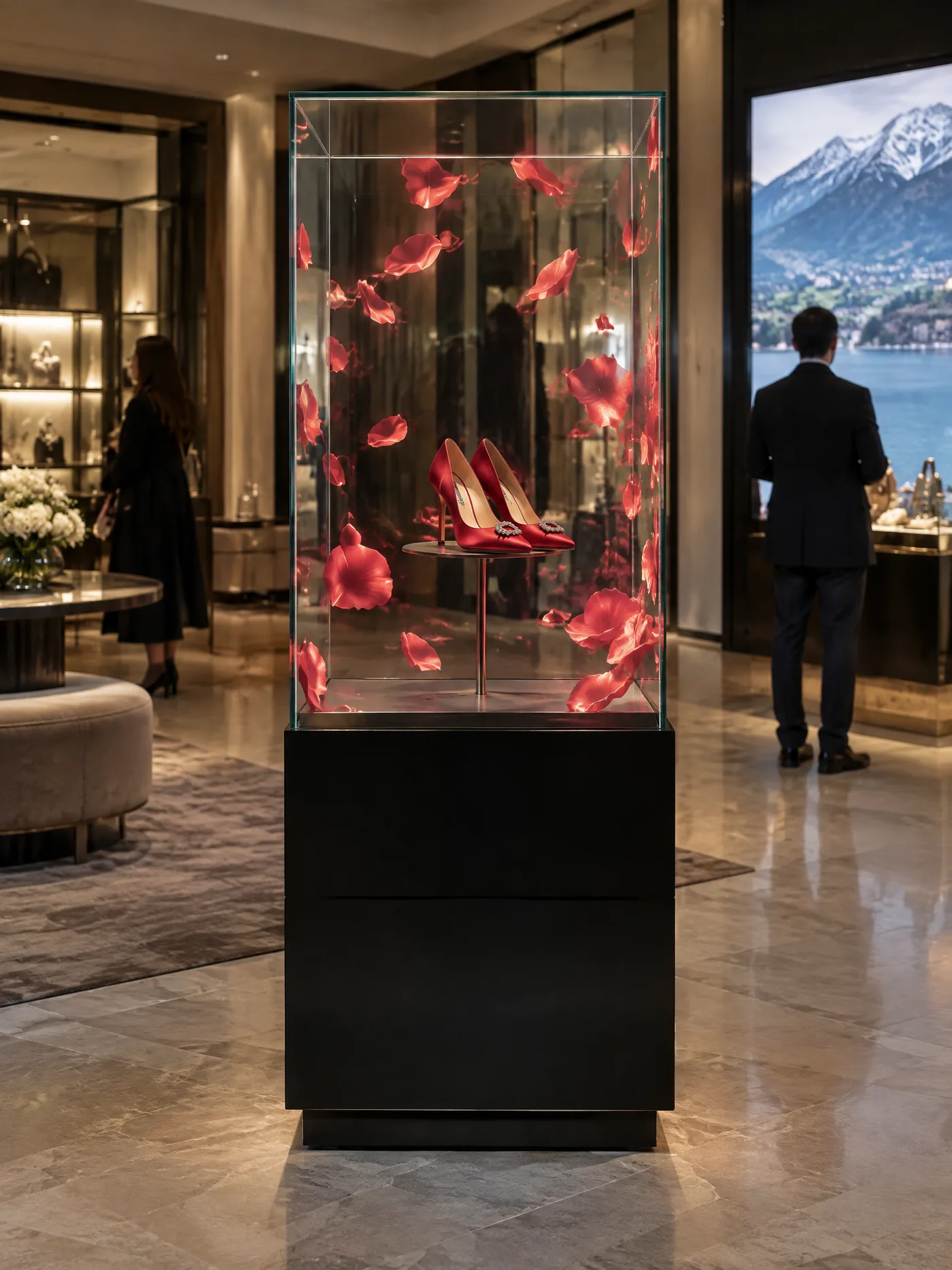
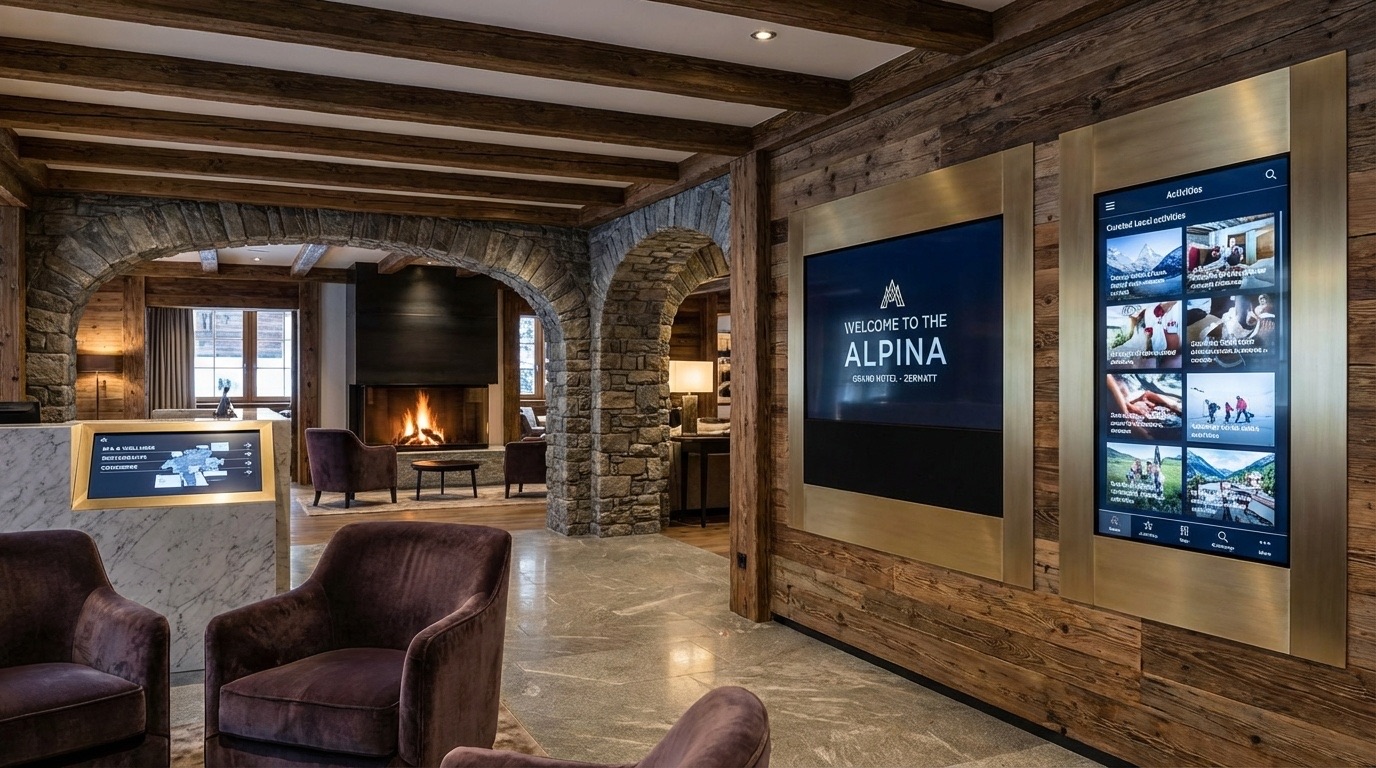
Lobby and Reception Areas are where first impressions form, and where Digital Signage has an immediate impact. Interactive welcome displays connected to the property management system can greet guests by name, with their consent, while digital concierge stations provide instant access to local recommendations, weather forecasts, and transportation options. Well-designed lobby displays surface hotel services that printed materials leave undiscovered.
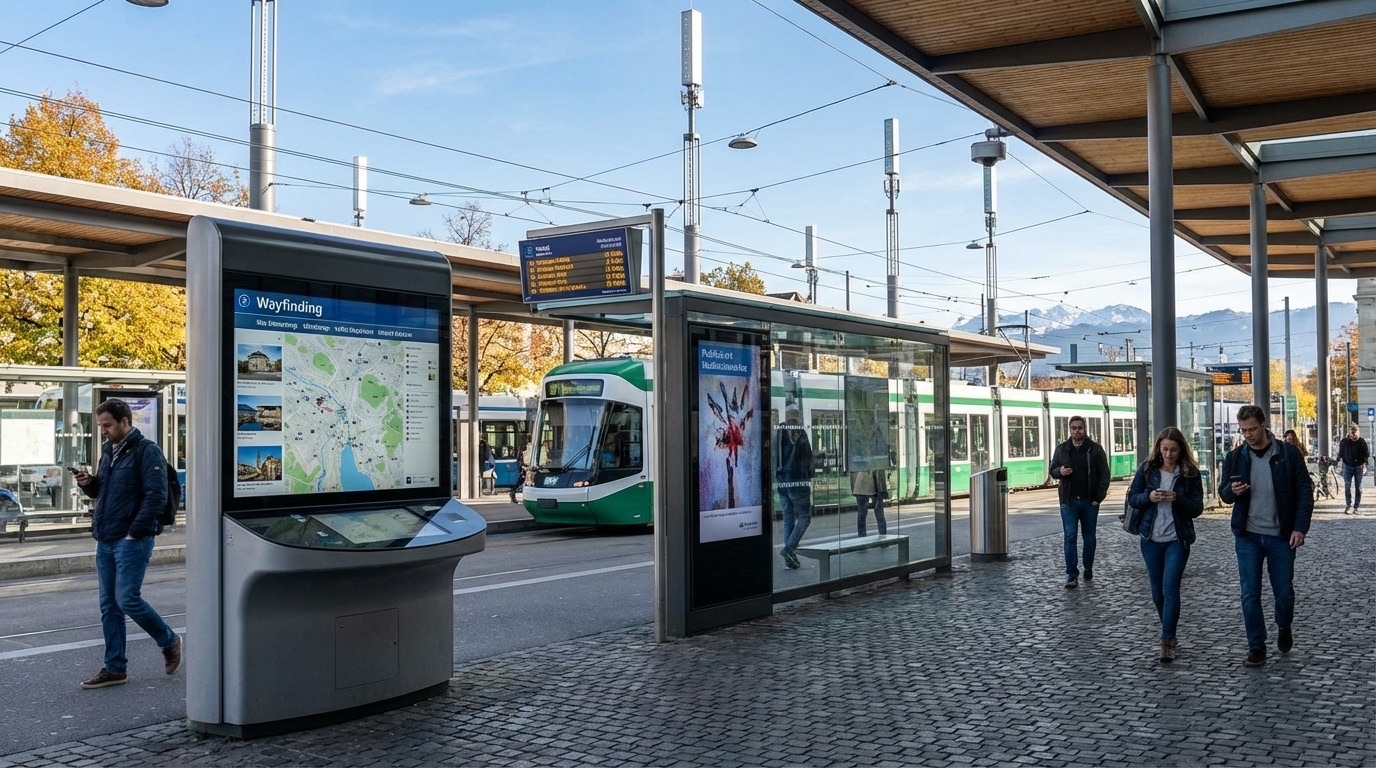
Wayfinding and Navigation addresses a persistent challenge in large hotel properties. Digital directory systems update instantly when meeting rooms change or events relocate, eliminating the confusion caused by outdated static signs. Touchscreen maps on interactive kiosks allow guests to find destinations independently while providing turn-by-turn directions, particularly valuable in sprawling resort properties or conference hotels.
Check-in and Check-out Automation responds directly to guest expectations. Self-service kiosks equipped with digital displays shorten queues while freeing staff to provide more personalised assistance to guests who prefer human interaction. The most sophisticated systems recognise returning guests through a booking code or the hotel app, never through biometrics, enabling smooth arrivals that respect privacy.
Event and Meeting Management represents perhaps the highest-impact application for business-oriented properties. Digital room signs eliminate scheduling confusion, real-time updates push instantly when sessions change, and branded welcome messages make event attendees feel expected. Integration with calendar systems means changes propagate automatically, reducing administrative burden substantially.
Restaurant and Dining Displays enhance the F&B experience while improving operational efficiency. Digital menu boards update instantly when items sell out, display allergen information on demand, and showcase daily specials with appetising visuals. Featuring the right dishes at the right time of day can shift what guests order.
In-Room Information Systems extend the Digital Signage experience into guest rooms. Modern implementations replace traditional compendiums with interactive screens that provide service information, enable in-room dining orders, control room features, and offer entertainment options. These systems generate valuable data about guest preferences while reducing printing costs and environmental impact.
Technology enabling exceptional experiences
The technology powering hotel Digital Signage has matured significantly, offering capabilities that seemed futuristic just years ago.
AI-Powered Content Management represents the cutting edge of hospitality Digital Signage. Systems can now generate and optimise content automatically, responding to occupancy levels, weather conditions, and guest demographics. The practical gain is operational: content that adapts itself reduces the manual workload of keeping every screen current.
Integration Capabilities determine whether Digital Signage becomes a standalone feature or a connected element of the overall guest experience. Modern systems connect with property management systems, point-of-sale platforms, event management software, and loyalty programmes. This integration enables personalised messaging: a loyalty member might see exclusive offers while a conference attendee sees session reminders.
Interactive Technologies including touchscreens, gesture recognition, and voice control make Digital Signage accessible to all guests. Many guests welcome technology assistance for simple enquiries, when it is implemented thoughtfully, with human help always within reach.
Mobile Integration bridges personal devices and hotel displays. QR codes on digital signs can transfer information directly to guest smartphones, while some systems enable guests to control public display content from their devices, selecting languages or accessibility options.
Measuring return on investment
Hotel Digital Signage can deliver measurable returns on several levels.
Operational Efficiency gains often provide the clearest financial justification. Digital wayfinding absorbs the recurring directional questions, and automated content updates eliminate the labour associated with physical signage changes: savings that compound across a property portfolio.
Revenue Enhancement comes through multiple channels. Promoting on-property services on digital displays supports ancillary revenue. Dynamic pricing displays can highlight last-minute spa openings or restaurant availability, capturing revenue that might otherwise be lost.
Guest Satisfaction is harder to quantify directly, but intuitive wayfinding and information systems contribute to the perception of modernity and attention to detail that shapes overall satisfaction.
Brand Differentiation becomes increasingly important as travellers choose between properties. Hotels with sophisticated digital experiences create memorable impressions that influence rebooking decisions and word-of-mouth recommendations.
Implementation considerations for hospitality environments
Successful hotel Digital Signage requires attention to factors specific to hospitality contexts.
Aesthetic Integration ensures technology enhances rather than detracts from carefully designed spaces. Display enclosures should complement interior design, content must maintain brand standards, and screen placement should feel natural within architectural contexts. Involving interior designers in Digital Signage planning from the outset helps achieve this.
Content Strategy demands continuous attention in hospitality environments where guest needs change constantly. Effective systems combine automated content with human curation, ensuring displays remain relevant and engaging. Seasonal updates, event-specific messaging, and time-of-day variations all require planning.
Multilingual Capabilities prove essential in Swiss hospitality, where guests arrive from all over the world. Modern systems offer automatic language detection through mobile integration or simple toggle options on touchscreens. Content management must accommodate multiple languages without multiplying the maintenance burden.
Reliability Standards must exceed those acceptable in other contexts. A dark or frozen screen in a hotel lobby damages guest perception and brand reputation. Premium implementations require redundant systems and a clearly defined maintenance plan.
Staff Training ensures team members can assist guests with digital systems and leverage displays to enhance service delivery. The most successful implementations treat Digital Signage as a tool that empowers staff rather than replaces them.
The future of hotel digital experiences
Emerging technologies promise even more sophisticated applications in hospitality contexts.
Personalisation at Scale will enable displays to recognise returning guests through their booking or the hotel app, never through biometrics, and adapt content to documented preferences. Integration with CRM systems will allow properties to acknowledge special occasions, remember room preferences, and suggest services based on past behaviour.
Augmented Reality Integration will extend Digital Signage beyond traditional screens. Guests might point their phones at artwork to access artist information, view virtual furniture in event spaces, or visualise menu items before ordering.
Sustainability Applications will highlight environmental initiatives that increasingly influence booking decisions. Digital displays can show real-time energy consumption, carbon offset achievements, and local sourcing information that resonates with environmentally conscious travellers.
Voice-First Interfaces will make Digital Signage accessible without requiring guests to approach screens or touch surfaces. Conversational AI will enable natural interactions with hotel information systems. Our case study on a conversational holographic avatar designed for a Swiss university reception shows what such a project involves.
For hotels navigating digital transformation, the lesson is simple: Digital Signage pays off when it is planned for the whole guest stay rather than added screen by screen. Properties that implement it thoughtfully, respecting the hospitality traditions that guests value while adopting what genuinely improves their stay, get the most from it.