DATAVSN is the Digital Signage software developed by HYPERVISUAL: a CMS first, to which anonymous audience recognition can be added. This article explains what it measures (anonymous counting, stop rate, dwell time, gender and age bracket), how the images are processed on site without identifying anyone, and how to use the figures to improve your content.
On this page
Key takeaways
- DATAVSN is a CMS first; anonymous audience recognition builds on it, then interactivity
- Metrics: anonymous counting, stop rate and dwell time, plus an anonymous breakdown by gender and age bracket
- Processing on site (edge computing): images are analysed on the device, never stored, and no one is identified
- Measurable optimisation: dwell time and stop rate compared screen by screen, week after week
- Figures aggregated before they leave the site, data hosted in Switzerland
What DATAVSN measures
The base is the CMS: the client distributes, schedules and updates content remotely. Anonymous audience recognition builds on it, then interactivity. With audience recognition, you know in real time how many people see your screens, how many stop and how long they look, without anyone being identified.
Digital out-of-home (DOOH) measurement is still marked by inconsistent standards: in July 2025 the IAB published its Digital Out-of-Home Measurement Guide precisely to help buyers and sellers align on a shared framework. Clear definitions therefore matter, and each DATAVSN metric is defined below.

Why measure a screen’s audience?
According to Grand View Research (June 2026 edition), the global Digital Signage market is expected to reach USD 58.4 billion by 2033, growing at 8.2% a year from 2026. Yet a screen produces results only when it reaches the right audience at the right moment, and many networks run blind: their audience is estimated from footfall rather than measured in front of the screen. DATAVSN measures that audience in real time, so that content can be improved on the basis of data.
The platform is developed by HYPERVISUAL, a Swiss integrator. It combines edge computing with anonymous audience recognition, and produces usable figures without storing images or identifying anyone.
How it works
Processing on site (edge computing)
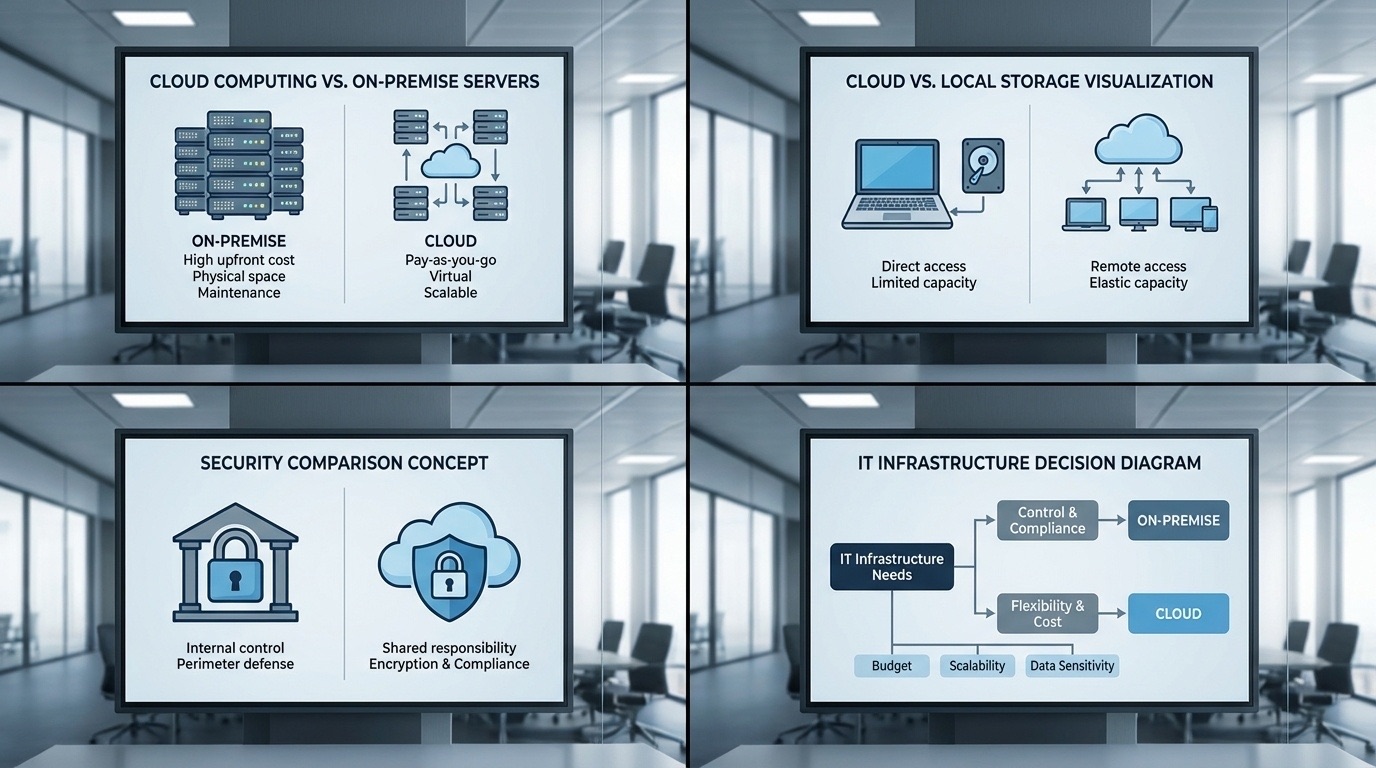
Unlike cloud analytics that send video streams to remote servers, DATAVSN processes everything on site. A camera placed on the screen sees only the people in front of it, and the images are analysed locally, on the device installed with the screen. No image and no personal data ever leaves the site.
This architecture has three advantages. First, processing happens in real time on site, so the screen can react to the audience in front of it without depending on a remote server. Second, bandwidth needs stay minimal, since only aggregated, anonymous figures are sent to the platform. Third, privacy protection is built into the architecture rather than dependent on data-handling policies.
The metrics
DATAVSN provides three metrics and an anonymous profile of the audience. None of them involves facial recognition or emotion detection: the analysis rests on anonymous counters computed locally.
Anonymous counting
How many people pass in front of the screen, counted without identifying anyone. Because the camera sees only the space in front of the screen, the count reflects the screen’s own audience rather than the footfall of the whole street or shopping centre.
Stop rate
The share of passers-by who stop rather than walk on: the first sign that a message catches the eye.
Dwell time
How long people look at the screen. Knowing that someone glanced at a screen differs fundamentally from knowing that they watched it for 12 seconds rather than 3. Read together with the stop rate, dwell time is the most useful signal for testing creative content: a message that many people pass but few stop for, or watch only briefly, is a missed creative opportunity.
Gender and age bracket
An anonymous breakdown of the audience by gender and age bracket, hour by hour. It lets scheduling follow the audience actually present, as the examples below show.
Using the data to improve content
Content optimisation workflow
Effective use of the data follows a systematic optimisation cycle:
Measurement phase: For two to three weeks the screen runs its existing loop while the system counts what happens in front of the window: how many walk past, how many stop, how long they look, and the anonymous breakdown by gender and age bracket, hour by hour. The purpose is not to prove anything yet. It is to find out which audience the window actually reaches, which is rarely the one the brand assumed.
A/B testing: Deploy content variations and measure the differences in performance. Test messaging, visual styles, call-to-action placement and timing. Statistical significance depends on traffic and on the size of the difference measured.
Iteration: Implement winning variations and continue testing secondary elements. Continuous improvement compounds over time: each cycle narrows the gap between what is scheduled and what actually holds attention. Our guide to calculating the ROI of Digital Signage shows how to turn such figures into business value.
What the system makes visible
Take a shopping-centre window. The counter first separates two populations that are usually lumped together: people who walk past, and people who stop. The ratio between them, the stop rate, tells you whether the window is working or merely switched on. Add to that the dwell time, the average time spent looking at the screen, and the hours when stops cluster, which do not always coincide with the busiest hours.
Audience recognition also provides an anonymous breakdown by gender and age bracket, and lets scheduling follow that profile. A retailer can decide that a mostly female audience in a younger age bracket brings a footwear line to the front, and that a mostly female audience in an older bracket switches to skincare. The rule is written by marketing, not by the camera: the system supplies the profile, the retailer decides the response.
In daily operation the screen sits on a screensaver as long as nobody is there. Someone stops, the system reads the anonymous profile in front of the glass and plays the sequence the commercial team assigned to that profile; when the person moves on, the screen returns to standby. Arbitration between several people is deliberately simple: the first person detected sets the sequence, and anyone else in the field is picked up in turn, once that detection is complete. Detection cascades rather than averaging profiles together, which keeps the behaviour predictable for whoever wrote the scheduling rules. This is targeted advertising in the ordinary marketing sense, the right message for the right audience, with one difference that matters: the targeting works on a profile, never on a person. No identity, no stored image, no recognition of a returning visitor.
These are configuration examples, not observed outcomes. We will publish performance figures only once they come from networks that have actually been running. For a concrete project, see our case study of a network of ten pop-up stores, where anonymous audience recognition was part of our proposal.
Privacy by design
Four design choices
Audience measurement is only useful if it respects privacy. DATAVSN addresses this through four design choices.
No image stored: the system never stores photographs or biometric templates. Image analysis happens in real time on the device and produces only anonymous statistics; once processed, the images are discarded.
Anonymous aggregation: all metrics are aggregated before they leave the device. The dashboard shows, for example, how many women in a given age bracket looked at the screen between 14:00 and 15:00, never the behaviour of an individual.
Swiss hosting: the data is hosted entirely in Switzerland.
Developed in-house: DATAVSN is developed by HYPERVISUAL, the Swiss integrator that installs it.
Access to the figures
The client consults the figures in DATAVSN from a web browser, screen by screen and hour by hour.
Getting started
HYPERVISUAL handles the full DATAVSN implementation: we visit the site if necessary, then install the hardware, configure the system and train your team. DATAVSN is available as an option on permanent screen installations.