Transparent LED displays show moving content on a shop window or a glass facade while keeping the view through the glass and letting daylight in. This guide explains how they work, where they are used, how to choose transparency, pixel pitch and brightness, what drives the cost, and how to install them and design content for them.
On this page
What are transparent LED displays and how do they work?
Transparent LED displays let viewers see through the screen while it shows digital content. Unlike conventional LED panels with a solid back, they use spaced LED strips, often only 2–4 mm wide, mounted on a transparent substrate, creating a mesh-like structure that lets light through.
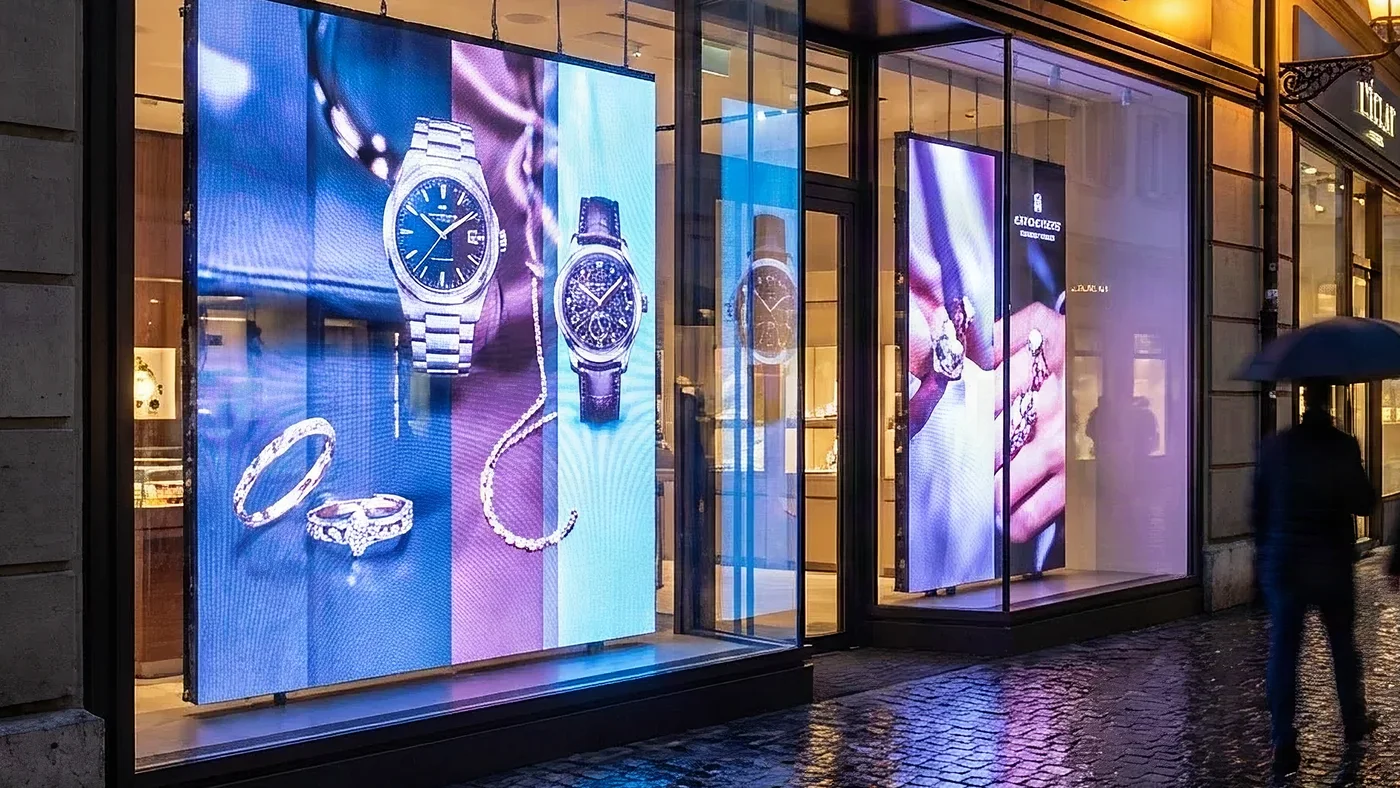
On shop windows and glass facades, two formats are used: transparent LED film, a self-adhesive film applied to the inside of the glass, and invisible holographic LED, a frameless LED mesh set behind the glass. The film shows a normal image on the glass; the invisible holographic LED, lit in front of a dark interior, makes the image appear to float. HYPERVISUAL sells both and configures them window by window.
Key technical characteristics
The transparency rate measures how much light passes through the display. It varies from one product to another: HYPERVISUAL’s transparent LED film, for example, lets about 92% of the light through. Higher transparency means better visibility through the screen, but potentially lower brightness.
The pixel pitch determines resolution: smaller pitches give sharper images at closer viewing distances. Understanding how pixel pitch affects image quality and viewing distance is essential for selecting the right display for your application.
Brightness, measured in nits (cd/m²), must be high enough for content to remain readable in bright daylight, a common condition in shop windows.
Installation configurations
- Glass-mounted systems applied to, or set against, the inside of existing windows
- Freestanding structures for architectural installations
- Ceiling-suspended displays for striking overhead effects
- Curved installations following curved glass or building contours
Transparent LED vs conventional Digital Signage: key differences
Understanding the differences between transparent LED and conventional Digital Signage screens helps determine the right solution for each application.
Light transmission is the fundamental difference. A conventional LED screen blocks all light and acts as a solid visual barrier. A transparent display lets much of the light through, preserving daylight and the view, which is critical in shops where the merchandise behind the screen must remain visible.
Weight and structure differ substantially. Transparent LED is far lighter than a conventional LED screen built from cabinets: HYPERVISUAL’s transparent LED film weighs 1.3 kg per 400 × 1’000 mm module, and the invisible holographic LED about 6 kg/m². This low weight allows installation on glass facades and structures that cannot support heavier displays.
Energy consumption can also favour transparent technology. With fewer LEDs per square metre, a transparent display can draw less power than a conventional screen of the same size while still reaching adequate brightness for most applications. Our guide to energy-efficient LED displays explains what drives consumption.
Visual characteristics involve trade-offs. Transparent displays have lower contrast and may look less vivid than solid LED screens, particularly at steep viewing angles or in very bright environments. However, the aesthetic integration with the architecture often outweighs these limitations.
Main applications of transparent LED
Shop windows
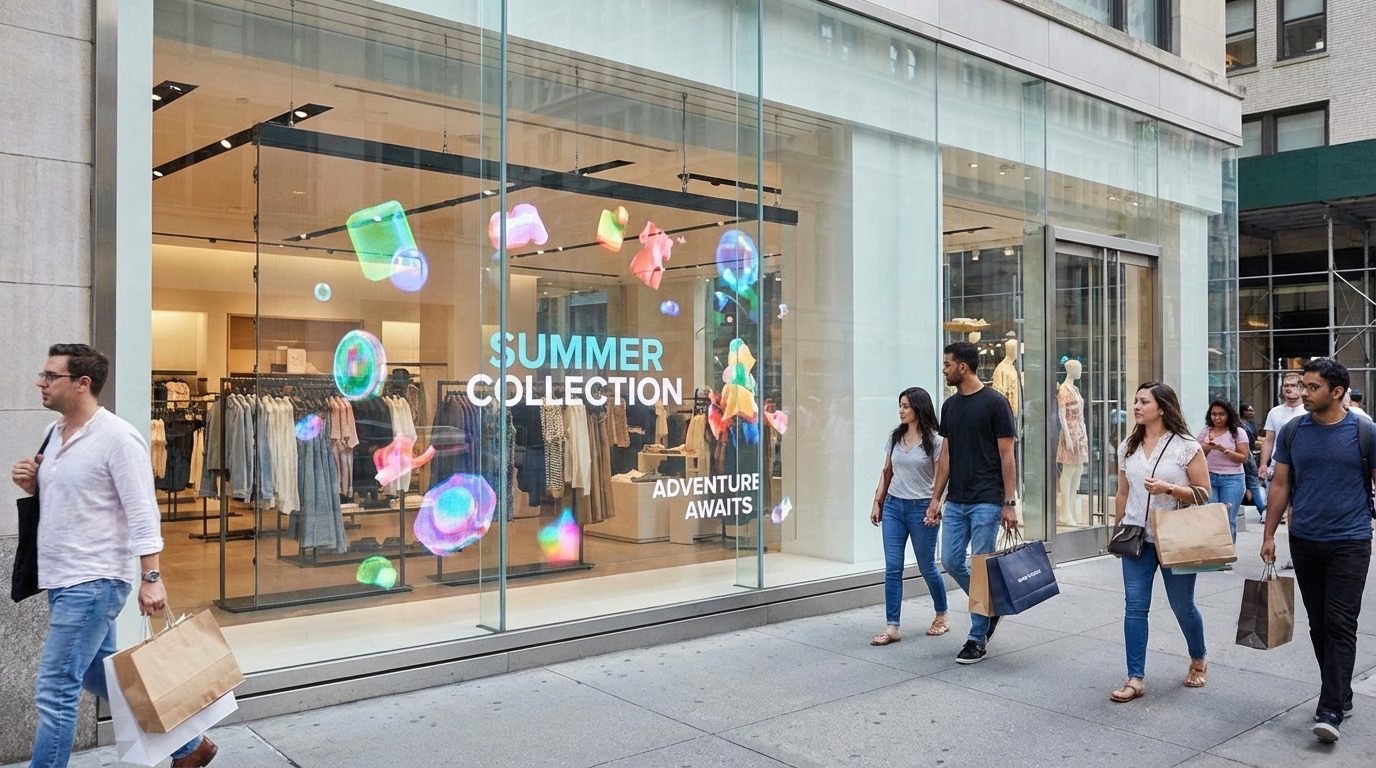
Transparent LED turns a passive window display into a dynamic communication channel while keeping the visual connection between the street and the interior. Moving, bright content naturally attracts attention, while the see-through screen keeps the products and the atmosphere of the shop visible.
Facades and building integration
Architects can specify transparent LED as an integral design element rather than an add-on. Media facades on commercial buildings, cultural venues and corporate headquarters use transparent technology to animate structures after dark while preserving their daytime appearance and the light inside.
Museums and exhibition spaces
Cultural institutions use transparent displays to create layered visual experiences, with storytelling that combines physical artefacts with digital overlays.
Offices and corporate spaces
Lobby installations, meeting room dividers and reception areas benefit from transparent LED’s ability to deliver information without creating visual barriers. The technology preserves an open, collaborative atmosphere while displaying dynamic content.
Technical specifications and selection criteria
Transparency rate
The right transparency depends on the primary application:
- High transparency: ideal for shop windows, where maximum visibility is essential and the content serves as an accent rather than the main focus
- Medium transparency: a balanced option for architectural media facades and exhibition spaces that need a bolder visual impact
- Low transparency: close to a conventional display, suitable when the content matters more than the view through the screen
Pixel pitch
As a general guide, the viewing distance determines the appropriate pixel pitch:
- P2.8–P3.9: close viewing, under 5 metres
- P5.0–P7.8: medium distances of 5–15 metres, lobby installations
- P10–P20: long viewing distances over 15 metres, building facades
For reference, the invisible holographic LED sold by HYPERVISUAL has a pixel pitch of 3.91 mm (P3.91), with a recommended viewing distance of 4 metres or more; the transparent LED film has a pixel pitch of 6.25 mm (P6.25), with a recommended viewing distance of 6 metres or more.
Brightness
Shop windows facing south or west, in direct sunlight, need the highest brightness. As a reference, HYPERVISUAL’s transparent LED film delivers 2’000 nits as standard and 4’000 nits in its full-sun option. North-facing windows and indoor installations need less.
Cost factors and return on investment
Investment breakdown
Transparent LED displays cost more than standard Digital Signage screens. The budget covers:
- Hardware: the cost per square metre is driven mainly by pixel pitch and transparency rate, and the finer the pitch, the higher the price
- Installation: professional mounting and configuration, which depend on the glass and the building structure
- Content management system: licensing and setup, billed per screen or per site depending on the vendor
- Maintenance: cleaning, calibration and repairs, to be budgeted every year
The total for a storefront installation depends mainly on surface area, pixel pitch and the structural constraints of the facade. Those three variables move the budget far more than the choice of supplier, which is why a figure only means something once measurements are known.
Where the return comes from
Return on investment (ROI) is calculated as (gains − costs) / costs. The gains can come from several sources:
- Footfall: a dynamic window can draw more passers-by into the shop
- Sales: content that presents products and promotions can support in-store purchases
- Advertising revenue: some retailers monetise window space outside opening hours
- Brand perception: premium technology supports a premium positioning
To measure these gains, record footfall and sales before installation, then compare them over an equivalent period afterwards.
An alternative worth knowing: the two-way mirror
Transparent LED is not the only way to keep a window readable and the merchandise visible. For a jeweller’s boutique network we equipped, the answer was different: open frame panels installed behind two-way mirrors, so the window reads as a mirror when the screen is off and becomes a display when content plays. The products stay centre stage and the screen itself remains hidden behind the mirror. This approach is documented in our case study on presence detection behind two-way mirrors.
The trade-off is explicit. Transparent LED lets a passer-by see through the image itself, which suits large architectural surfaces and content layered over the scene behind it. A mirror-mounted panel gives full contrast and a conventional image, but only in the framed area it occupies. The question to settle first is not which technology is more advanced, but whether the content should coexist with the background or replace it.
Installation best practices
Site assessment
Successful transparent LED installations require thorough pre-installation analysis:
- Structural evaluation: verify glass or mounting surface can support display weight
- Electrical capacity: ensure adequate power supply with proper surge protection
- Light analysis: measure ambient light levels throughout the day to specify appropriate brightness
- Viewing angles: map primary audience positions to optimise content placement
Installation process
Professional installation typically follows these phases:
- Glass preparation for adhesive-mounted systems or frame installation for suspended displays
- Cable routing to maintain aesthetic cleanliness
- Panel mounting with precise alignment for seamless appearance
- Controller configuration and network integration
- Calibration for colour accuracy and brightness uniformity
- Content testing across various lighting conditions
Content strategy for transparent displays
Design principles
Effective transparent LED content differs from traditional Digital Signage:
- High-contrast graphics: white or bright content on transparent/black backgrounds maximises visibility
- Bold typography: thin fonts disappear; use heavier weights with adequate spacing
- Strategic animation: movement attracts attention but should not overwhelm the see-through effect
- Negative space utilisation: allow periods where display is predominantly transparent
Content types that excel
- Product highlights with pricing and promotions
- Brand storytelling and atmospheric content
- Real-time information displays
- Social media integration and user-generated content
- Seasonal and event-driven campaigns
Accessibility in public spaces
When transparent LED displays are installed in public spaces, they should serve all users. Our guide to Digital Signage accessibility and European compliance explains how to take different visual and hearing needs into account.
Conclusion
Transparent LED displays change the way shop windows and buildings communicate. By adding dynamic content while preserving transparency, they resolve the long-standing conflict between Digital Signage and architectural aesthetics.
For retailers seeking to differentiate their storefronts, architects designing distinctive buildings and organisations creating memorable visitor experiences, transparent LED offers real possibilities. The higher initial investment should be weighed against the expected gains in attention, brand perception and efficiency.
HYPERVISUAL designs transparent LED solutions for shop windows and glass facades in Switzerland and Europe.