The difference between a screen people ignore and one that drives action lies in choosing formats that fit the audience, the location and the viewing time, then executing them with discipline. This guide examines 12 content formats that work in retail, corporate and hospitality settings, with the practical rules to get each one right.
On this page
According to Grand View Research (June 2026), the global Digital Signage market, valued at USD 31.1 billion in 2025, is projected to reach USD 58.4 billion by 2033, a compound annual growth rate of 8.2% from 2026 to 2033. What sets one installation apart from another, however, is rarely the screen: it is the content.
Key takeaways
- Format follows context: transit calls for 5–10 second clips, waiting areas support 30–60 second stories; matching length to viewing time beats production value
- Dayparting is the cheapest optimisation available: the same screen should not show the same content at 8 am and 8 pm
- Design discipline wins: three lines of five words, sans-serif type, 8–12 seconds per message, full loops of 2–3 minutes
- Measure and iterate: set a baseline, compare content variants, and let anonymous audience data decide what stays on screen
1. Short-form video
Video remains the reference format for capturing attention: motion draws the eye where a static poster does not. The craft is in the length: transit environments call for 5–10 second clips readable in passing; retail waiting areas support 30–60 second narratives; a window display needs a message that lands in a glance. Product demonstrations, behind-the-scenes footage and short testimonials all work, provided every second earns its place.
2. Motion graphics
Motion design bridges static images and full video production. Subtle animations (text reveals, logo movements, transitioning backgrounds) add life without a film crew. Keep each animated element’s cycle within the 8–12 second rotation window, so viewers catch the complete message regardless of when they start watching.
3. Social media walls
Live social content turns passive screens into community hubs: branded hashtags, customer posts, event reactions. It shines at events, in retail and in corporate lobbies, with two conditions: active moderation and a fallback playlist for quiet hours. User-generated content adds authenticity while lightening the content production load.
4. Digital menu boards
In food service, the menu board is the workhorse format: appetising photography, prices updated in real time, sold-out items removed instantly, allergen information on demand. Dayparting (breakfast, lunch and dinner content switching automatically) keeps the board relevant at every hour. The economics belong in your Digital Signage ROI calculation: menu printing savings compound with every price change.
5. Interactive QR codes
QR codes extend the screen onto the visitor’s phone and make attention measurable. The rule: offer immediate value. A discount, a product sheet, a booking page or a contest entry converts a glance into a traceable action; a QR code that leads to a homepage converts nothing.
6. Customer content and social proof
Customer photos, reviews and testimonials displayed on screen build trust faster than any promotional claim. Secure usage rights, moderate before display, and rotate fresh material: stale testimonials read as neglect.
7. Real-time information
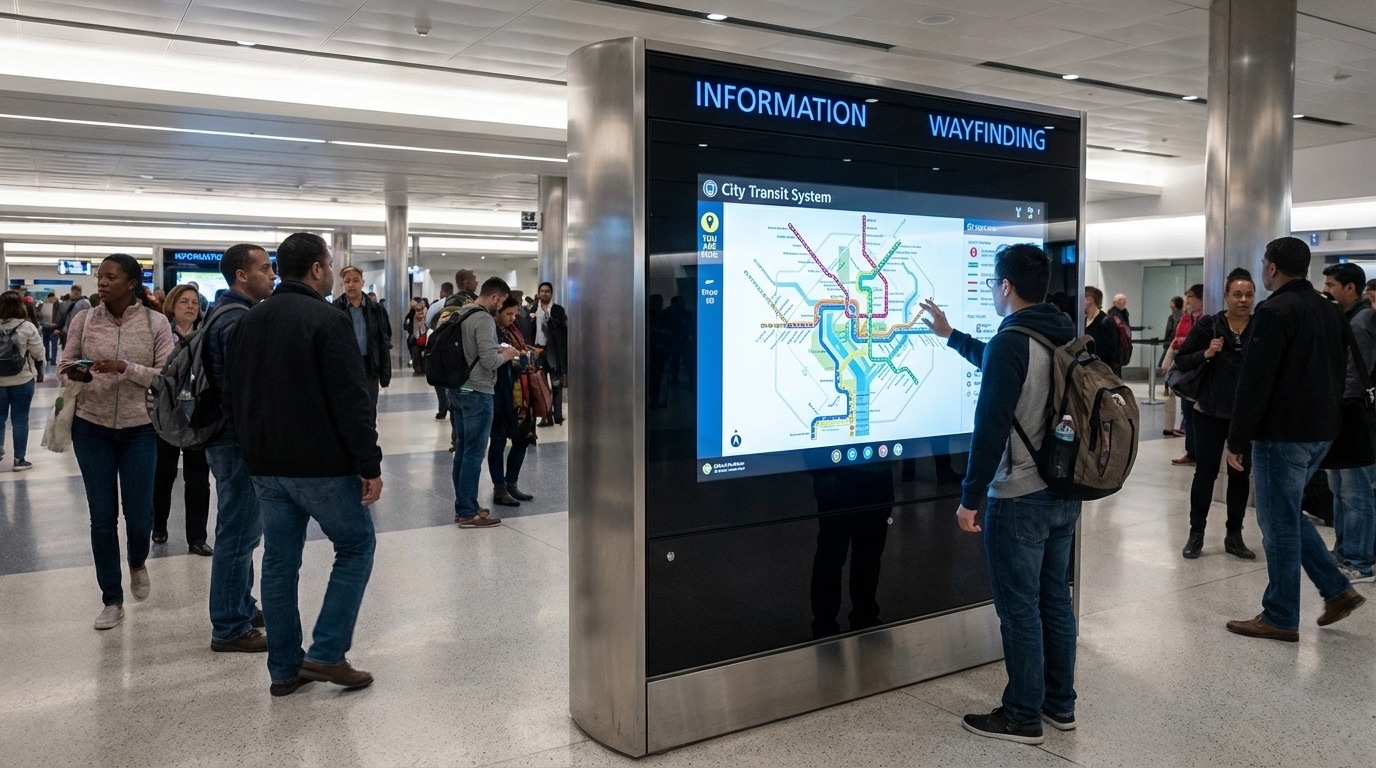
News headlines, transit departures, sports scores: information utility gives people a reason to look at the screen repeatedly. The screen becomes a service first and an advertising medium second, which is precisely why the advertising works better.
8. Countdown timers
Countdowns create urgency: use them honestly. Genuine deadlines only: an offer that truly ends, doors that really open, a sale that actually closes. A countdown that resets nightly trains viewers to ignore every message that follows.
9. High-impact photography
When video is impractical, exceptional photography still commands attention. Plan for the display’s native resolution (4K-ready assets for modern LED walls), consistent art direction and images composed for the screen’s orientation rather than cropped as an afterthought.
10. Weather-contextual content
A weather widget earns glances; weather-triggered content earns sales. Rain switches the playlist to umbrellas and delivery offers; a heatwave promotes the summer range and cold drinks. Context rules turn the forecast into a merchandising tool.
11. AI-assisted personalisation
AI now adapts content to context in real time: time of day, weather, anonymous audience characteristics, stock levels. The principle to keep: adaptation targets a profile, never a person. For the conversational frontier of this trend, see how AI avatars are transforming reception.
12. Interactive games and participation
Gamification converts passive viewing into participation: quizzes, photo moments, spin-to-win mechanics at events. Interaction extends dwell time and, with an opt-in step, can build a marketing base. Keep mechanics simple enough to complete in under a minute.
Design principles that make every format work
The 3×5 rule limits text to three lines of five words. Sans-serif fonts sized for the viewing distance ensure readability. Rotate messages every 8–12 seconds, keep complete playlist loops at 2–3 minutes, and maintain strong contrast between text and background. Leave safe margins: content cropped by a bezel communicates carelessness.
Measure, then iterate
Set a baseline before changing your content mix, then compare: which messages hold attention, which time slots perform, which formats drive the actions you can trace (QR scans, promo redemptions). Anonymous audience measurement (anonymous counting, stop rate, dwell time) makes these comparisons possible: capabilities to configure around your objectives, not guarantees. Our case study of a ten-store pop-up network shows how this measurement is designed to compare sites with one another and adjust content to real visiting hours.
Conclusion: content worthy of the screen
The technology exists to create extraordinary visual experiences; the challenge is producing content worthy of that capability. Pick the formats that fit your context, apply the design discipline, measure honestly, and your displays turn from passive screens into communication tools that inform, engage and drive action.